How to Buy a Vacation Home in Costa Rica as a Foreigner
Sep 24, 2026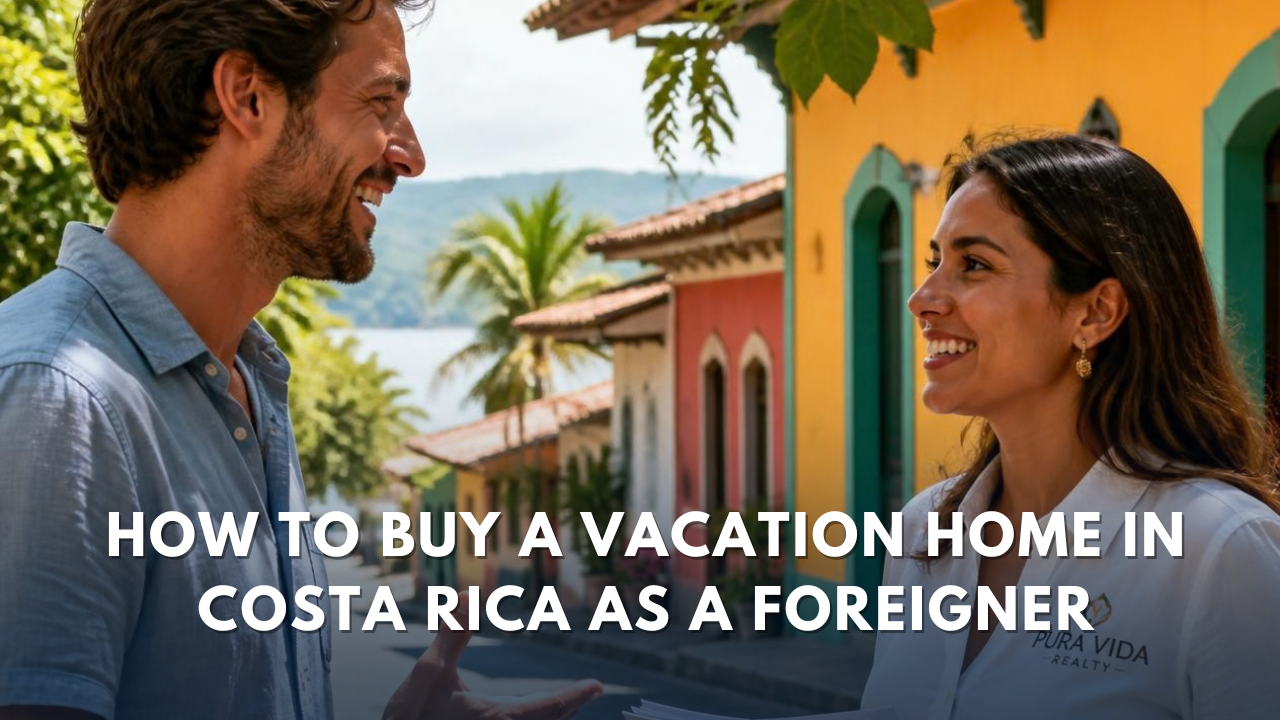
At some point, the question changes.
You stop asking whether Costa Rica is beautiful. You already know it is. You stop wondering if you'd love owning something there. You already know you would. What shows up instead is more specific. How does this actually work? Who do you call first? What happens between deciding you want to do this and the day you own something?
That shift, from dreaming about it to needing to know how it works, is the moment this post is for.
What Actually Happens, In Order
Buying property in Costa Rica isn't as foreign a process as it can feel from the outside. It does have its own order of operations, and knowing that order removes most of the fear.
You start with real due diligence, not just browsing. Look past the photos. A property's guest demand, its title history, and its actual location relative to where people want to stay all matter more than how it looks online. This is the step people either skip or rush, and it's the one that causes the most regret later.
Then comes the attorney, not the realtor, as your first real relationship. In Costa Rica, a licensed attorney runs the title search, confirms the property has no liens, and checks whether it falls under any special rules, like the maritime zone restrictions that apply to some coastal properties. That's simply a set of extra ownership rules for land near the beach. A good attorney walks you through whether it applies before you get attached to a property.
Next comes the offer and deposit. Once a property clears due diligence, you make a formal offer, and a deposit goes into escrow, held by a neutral third party until closing. This protects both sides. It's standard practice, not a sign anything unusual is happening.
Closing comes next, and it typically takes weeks, not months, once the title work is clean. Property in Costa Rica is often held through a corporation rather than in a buyer's personal name, mainly for liability and estate planning reasons. That can sound complicated the first time you hear it. It's a routine structure, not a red flag.
After closing, the real work starts. You register the property properly, set up management if you're renting it out, and make the practical decisions that turn a purchase into something that actually functions.
None of these steps are secret. What's harder to find is someone who walks you through them in plain language before you're already three steps in and confused.
Where People Often Go Wrong
The mistakes I see aren't usually about the property itself. They're about the order things happen in.
Someone falls in love with a place and wires a deposit before the title search finishes, then finds out afterward there's a lien or a boundary issue that should have stopped the deal earlier. Someone hires the first attorney a realtor recommends, without realizing that attorney may answer to the seller's side more than to them. Someone assumes a maritime zone property works exactly like any other piece of land, then finds out otherwise after the fact.
Almost every one of these mistakes comes down to the same root cause. Moving fast on excitement instead of slow on process. The fix isn't more caution. It's the right order, with the right people confirming each step before you move to the next one.
I Had to Learn This Before I Could Teach It
I didn't inherit a network of trusted people in Costa Rica. When I bought Villas Espavel, I had to find an attorney myself, ask the questions that actually mattered, and learn to tell the difference between someone protecting me and someone just trying to close a deal.
That process is what turned into the vetted network I use today. Attorneys and local partners I've worked with directly, not names I found online and hoped for the best with. When I walk someone through this process now, I'm walking them through the same order I had to learn for myself, minus the part where I had to guess.
You Don't Have to Piece This Together Alone
Every step above can be done well or done poorly, and the difference usually comes down to who's standing next to you while you do it. A realtor's job is to close the sale. An attorney found through a quick search has no track record you can actually verify. Neither one has a reason to slow you down when slowing down is exactly what protects you.
This is the part of the process where having a proven path and people who've actually been vetted matters most. Not because the process itself is impossibly complicated, but because getting the order and the people right is what turns a good decision into a safe one.
What I've shared here is the general shape of it. The real detail, the exact questions to ask at each stage, the paperwork to review, the order to move through it, is more than any single post can hold.
Where to Go From Here
If these are the questions on your mind right now, you've moved past dreaming and into something more real. That's worth recognizing on its own.
Join my email list by subscribing below to get new posts like this one, written for exactly this stage of the process.
And if you have a minute, email me directly at [email protected] and tell me what part of the buying process still feels the least clear to you. Your answer might shape the next post I write.
Stay connected with news and updates!
Join our mailing list to receive the latest news and updates from our team.
Don't worry, your information will not be shared.
We hate SPAM. We will never sell your information, for any reason.