Costa Rica Property Law: What Foreign Buyers Should Know
Oct 01, 2026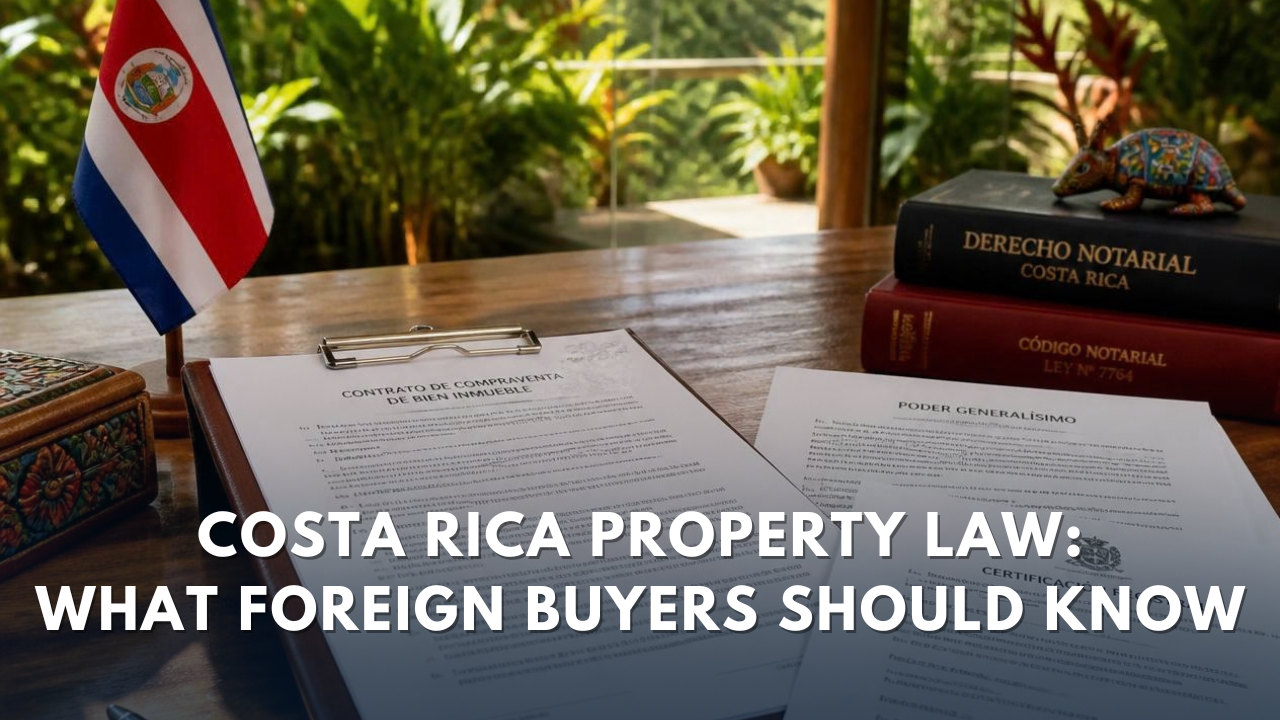
A couple of weeks ago, I wrote about whether a Costa Rica vacation home is a good investment. I said the legal side was coming next. Here it is.
Foreign ownership is legal in Costa Rica. It is common, well established, and protected by real law, not a workaround or a gray area someone talked their way into. That surprises people. Most buyers arrive assuming they will need a local partner or some clever structure just to hold property here. They do not.
What actually determines whether a purchase is safe is not the fact that you are a foreigner. It is whether the right legal work happened in the right order, by someone who was working for you and not just moving the deal forward.
What the Law Protects
Foreigners can own property in Costa Rica outright, in their own name or through a corporation, with the same rights as a Costa Rican citizen. That includes the right to sell, lease, or pass the property to heirs.
The one real exception is land inside the maritime zone: the first 200 meters from the high tide line along most coastlines. The first 50 meters is public land and cannot be owned by anyone. The next 150 meters is concession land, and it works differently. It is a long-term right to use the land rather than a title, and eligibility depends on residency status. This does not make coastal property off limits. It means a property in that zone needs a different kind of legal review than a property outside it, and that review has to happen before you get attached to the place.
Outside the maritime zone, ownership is straightforward. The law is not where buyers tend to get into trouble. The process is.
Where the Real Risk Sits
A title search matters more here than almost anywhere else, because Costa Rica's property registry, the Registro Nacional, does not always reflect reality in real time. A property can look clean on paper and still carry an unresolved lien, a boundary dispute, or an inheritance claim that has not been formally settled. A real title search catches this before money changes hands. Skipping it, or treating it as a formality, is where I have seen buyers get hurt.
The second real risk is who is doing that search. An attorney who was recommended by the seller's agent, or found through a quick search with no track record you can verify, has no obligation to slow the deal down when slowing down is exactly what protects you. A good attorney in Costa Rica works only for you, confirms the title is clean, checks whether the maritime zone applies, and is not in a hurry to close.
The third risk shows up after closing, in how the property is held. Most buyers end up holding property through a Costa Rican corporation rather than in their personal name, mainly for liability and estate planning reasons. That structure is routine and well understood by attorneys here. It becomes a risk only when it is set up carelessly, or by someone unfamiliar with how it is supposed to work.
None of this is exotic. It is the same discipline that protects a buyer anywhere: verify the title, use someone who works for you, and set the ownership structure up correctly the first time.
I Learned This the Way Most People Do
When I bought Villas Espavel, I did not have a network of trusted people already in place. I had to find my own attorney, ask questions I did not fully know how to ask yet, and learn the difference between someone protecting my interests and someone simply trying to close the deal.
That is the same legal groundwork I walk people through now, minus the part where they have to guess who to trust.
What I've Shared Here Is the General Shape of It
The real detail, the specific questions to ask an attorney before you hire one, what a clean title search should turn up, and how the maritime zone applies to a specific property, is more than any single post can hold. It is the kind of thing I walk people through step by step in the Masterclass, with an actual checklist and a list of questions in hand. For now, it is worth knowing the shape of it before you need it. The full detail can come later.
Where to Go From Here
If the legal side was the part holding you back from feeling confident about this, that hesitation was doing its job. It is supposed to slow you down until you know enough to move forward safely.
Join my email list to get new posts like this one, written for exactly this stage of the process.
And if you have a specific legal question on your mind, email me directly at [email protected] and tell me what it is. Your answer might shape the next post I write.
Stay connected with news and updates!
Join our mailing list to receive the latest news and updates from our team.
Don't worry, your information will not be shared.
We hate SPAM. We will never sell your information, for any reason.